Skoolie Window Replacement
Skoolie window replacement costs $150–$900 per opening. The three common paths are replacing broken factory bus glass ($200–$450 per unit), deleting an opening with a welded and insulated metal panel ($150–$400 in materials per opening), and cutting in an RV-style dual-pane or awning window ($350–$900 installed). Every conversion must keep at least one code-compliant emergency egress opening in the living space.
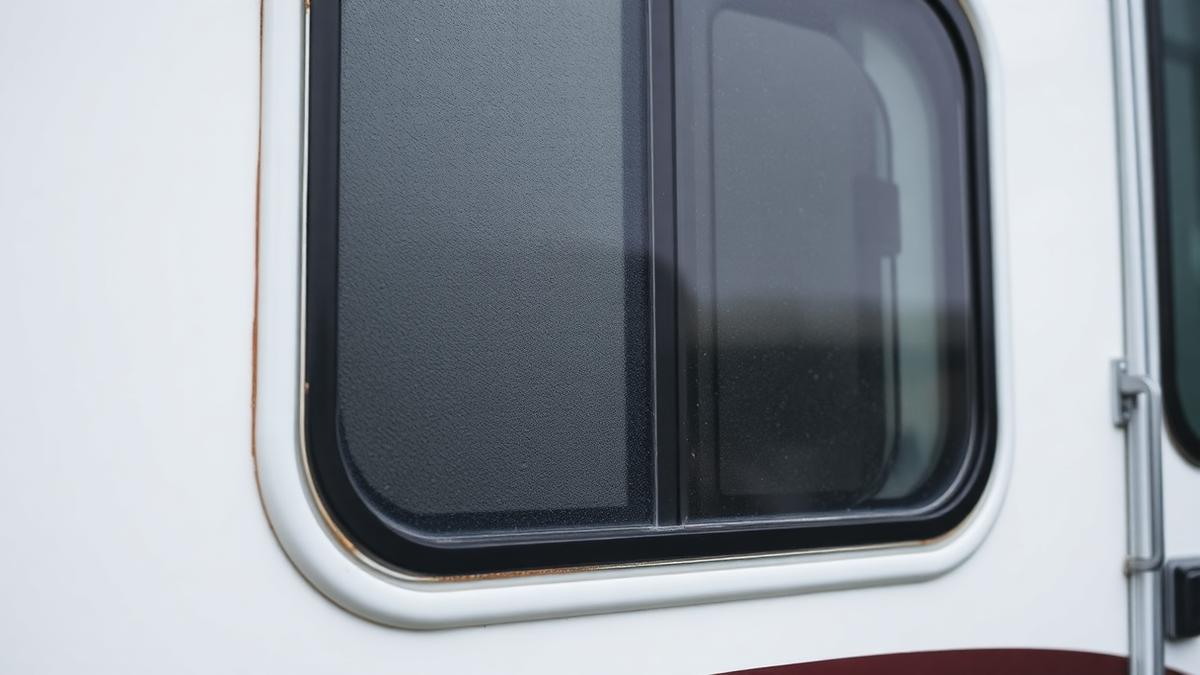
- Glass type
- Factory bus tempered, RV awning/dual-pane, or metal delete
- Typical cost
- $150 – $900 per opening
- Lead time
- Days for bus glass; 1–3 weeks for RV windows
- Mobile service
- Partly — glass set mobile, cutting is shop or DIY work
Common skoolie conversion platforms
- Blue Bird All American skoolie
- Thomas Saf-T-Liner
- IC CE Series
- Chevy short bus
- Ford E-450 shortie
Replace, delete, or upgrade — three different budgets
Almost every skoolie build faces the same decision on each opening. Keeping the factory window is cheapest and preserves the bus look. Deleting the opening gives the best insulation value and the most usable wall for cabinets. Cutting in an RV window gives you a real screen, a real awning-style vent, and dual-pane thermal performance.
Most finished builds mix all three: factory glass at the driver's area, deletes behind the galley and closet, and RV windows in the bedroom and living space where ventilation and view matter.
- Replace one factory bus window unit: $200 – $450
- Broken tempered pane only, existing frame: $120 – $260
- Metal delete panel, welded and insulated: $150 – $400 per opening
- RV awning window cut-in: $350 – $700 installed
- Dual-pane RV window cut-in: $500 – $900 installed
- Butyl tape, sealant and trim per opening: $25 – $70
Egress rules you cannot delete away
School buses are built with a specific count of emergency exits, and stripping them all out during a conversion creates both a safety and an inspection problem. Most jurisdictions that title a skoolie as a motorhome expect at least one exit in the sleeping area that opens from the inside without tools.
Keep one factory push-out or install an RV egress window in the bedroom. Egress-rated RV windows are labeled as such and use an oversized latch — do not assume a standard sliding window qualifies.
Sealing, condensation and the real failure mode
Skoolie window leaks almost never come from the glass. They come from the flange seal and from screws driven into a rib rather than flat sheet. Butyl tape behind the flange plus a self-leveling lap sealant on the top edge is the combination that survives highway rain.
Single-pane bus glass also sweats badly in cold weather because the metal frame is a straight thermal bridge. Builders who plan to winter in a skoolie should budget for dual-pane RV windows in the sleeping area — it is the single largest condensation reduction available short of deleting the openings entirely.
Find Skoolie Conversion Glass Installers Near You
Tell us about your RV and we'll match you with a verified mobile or in-shop RV glass specialist in your area.
Prefer to browse first? Search RV glass shops by zip code.
Frequently Asked Questions
How much does it cost to replace a skoolie window?
$150–$900 per opening. A factory bus window unit runs $200–$450, a welded metal delete $150–$400 in materials, and a cut-in RV dual-pane window $500–$900 installed.
Can I delete all the windows in a bus conversion?
No. Keep at least one code-compliant emergency egress opening in the sleeping area that can be opened from the inside without tools, or the build can fail motorhome titling and inspection.
Can you put RV windows in a school bus?
Yes, and it is common. The opening is cut and framed to the window's rough-opening spec, then the flange is set on butyl tape and screwed to flat sheet metal, with self-leveling sealant across the top edge.
Why do skoolie windows sweat so badly?
Single-pane bus glass in a metal frame is a direct thermal bridge to the outside. Dual-pane RV windows in the sleeping area are the most effective fix for cold-weather condensation.