RV Glass Near Me — How to Find a Real RV Glass Specialist
Typical cost: $75 – $3,000+
RV glass work near you is almost always done mobile — the tech comes to your driveway, RV park site or storage lot. Chip repair runs $75–$200, chassis windshields $400–$900, and curved Class A coach glass $1,500–$3,000+ per side. The limiting factor is glass availability, not scheduling: chassis glass ships in days, coach-specific panels take one to six weeks.
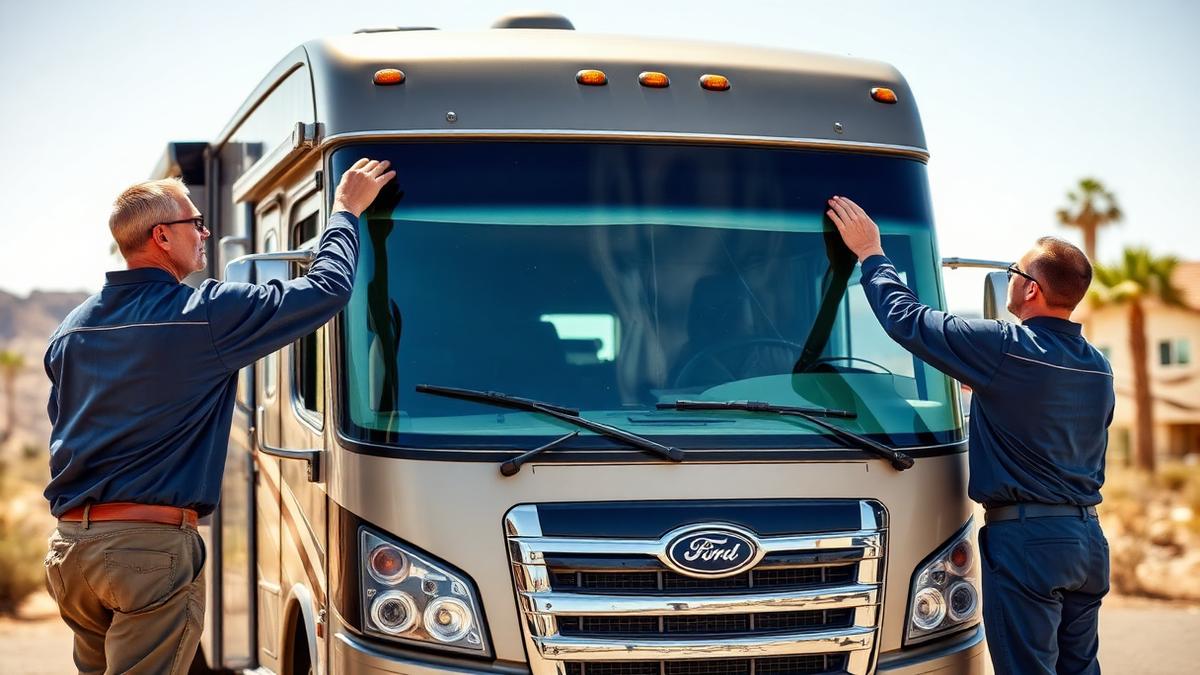
Searching for RV glass near you turns up auto-glass chains that mostly cannot help. RV windshields and windows need coach-specific glass, a two-person crew and mobile equipment, which is a different trade from car glass.
This page explains how to identify a shop that genuinely does RV work, what the job should cost, and where to find coverage in your state or city.
Get RV Glass Quotes Near You
Tell us about your RV and we'll match you with a verified mobile or in-shop RV glass specialist in your area.
Prefer to browse first? Search RV glass shops by zip code.
How to find a real RV glass specialist near you
- 1
Identify your glass before you call
Note the RV year, make, model and class, and whether the windshield is one-piece or two-piece, flat or curved. For side glass, note whether it is single-pane, dual-pane (insulated), fixed, slider or an emergency exit. This one minute of prep is what separates a real quote from a callback.
- 2
Filter for RV-specific experience, not auto glass
Ask directly: how many Class A two-piece windshields have you set in the last month? National auto-glass chains handle van-chassis cab glass fine but decline or subcontract coach glass, and a subcontracted job costs more and carries a murkier warranty.
- 3
Confirm the glass can actually be sourced
Ask the shop to confirm the part number and lead time with their supplier before you commit. Coach glass is molded to a specific cap; the wrong part wastes a service window and, on discontinued panels, can mean weeks of delay.
- 4
Check insurance handling before you pay out of pocket
Comprehensive coverage usually pays for glass minus the deductible, and several states have zero-deductible glass rules. Confirm whether the shop bills the carrier directly and whether the claim is treated as a glass-only claim, which generally does not raise premiums.
- 5
Verify site conditions for mobile work
The tech needs level ground, room to work both sides of the rig, and weather within urethane spec. Cold or wet conditions extend safe-drive-away time. Confirm the plan for rain and whether the crew brings a canopy.
- 6
Get the warranty and cure time in writing
A complete quote states the glass, gasket or urethane system, trip fee, warranty on leaks and workmanship, and the safe-drive-away time before the rig can be moved. Anything less is a verbal estimate, not a quote.
Why the first shops search shows you usually cannot do the job
Search a glass term near your location and you get auto-glass chains and body shops. Those results are correct for a car and wrong for a coach. RV windshields are large laminated panels — often 40–80 lbs per side — set into a fiberglass cap, either bonded with urethane or seated in a rubber gasket. A two-person crew, coach-specific glass and different setting tools are the baseline requirement.
This directory exists to shorten that filter. The shops listed here work on motorhomes daily, source coach glass through RV-specific suppliers, and travel to your rig.
- National auto-glass chains: fine for Sprinter, Transit and ProMaster cab glass, will usually decline curved Class A panels
- RV dealerships: can order the part, typically subcontract the install and add a markup, and want the rig on their lot for days
- Body shops: can handle the fiberglass cap repair around the glass but rarely set the glass themselves
- Mobile RV glass specialists: the correct call for Class A, Class C and dual-pane window work
What RV glass work near you costs
Price is driven by glass size, curvature and availability far more than by labor. A curved Class A panel is laminated to a specific mold and is the top of the range; a chassis windshield shared with a commercial van is the bottom.
- Class A curved two-piece windshield: $1,500 – $3,000+ per side installed
- Class A flat two-piece windshield: $900 – $2,000 installed
- Class C chassis windshield (Ford E-450, Chevy 4500): $400 – $900 installed
- Class B camper van (Sprinter, Transit, ProMaster): $350 – $1,200 installed, more with ADAS calibration
- Side, slider or emergency-exit window: $250 – $900 per window
- Dual-pane (foggy) window reseal or IGU rebuild: $300 – $800 per window
- Chip or short crack repair: $75 – $200
What to have ready when you call
Every quote gets faster and more accurate with the same six data points. Photograph the damage and the full front cap or window from outside before you dial.
- Year, make, model and class of the RV
- One-piece or two-piece windshield; flat or curved
- Gasket-set or urethane-bonded (look for a rubber lip around the glass)
- Single-pane or dual-pane for side windows
- Your ZIP or postal code and whether the rig can be reached by a service van
- Insurance carrier and comprehensive deductible
RV Glass across the United States and Canada
Coverage is mobile-first almost everywhere: the installer brings the glass, the urethane and the stands to your site. Pick your state, province or metro for local pricing, lead times and the shops that actually carry coach glass in that market.
By state
- RV Glass in Arizona
- RV Glass in California
- RV Glass in Texas
- RV Glass in Florida
- RV Glass in Nevada
- RV Glass in Colorado
- RV Glass in Alabama
- RV Glass in Alaska
- RV Glass in Arkansas
- RV Glass in Connecticut
- RV Glass in Delaware
- RV Glass in Georgia
- RV Glass in Hawaii
- RV Glass in Idaho
- RV Glass in Illinois
- RV Glass in Indiana
- RV Glass in Iowa
- RV Glass in Kansas
- RV Glass in Kentucky
- RV Glass in Louisiana
- RV Glass in Maine
- RV Glass in Maryland
- RV Glass in Massachusetts
- RV Glass in Michigan
- RV Glass in Minnesota
- RV Glass in Mississippi
- RV Glass in Missouri
- RV Glass in Montana
- RV Glass in Nebraska
- RV Glass in New Hampshire
- RV Glass in New Jersey
- RV Glass in New Mexico
- RV Glass in New York
- RV Glass in North Carolina
- RV Glass in North Dakota
- RV Glass in Ohio
- RV Glass in Oklahoma
- RV Glass in Oregon
- RV Glass in Pennsylvania
- RV Glass in Rhode Island
- RV Glass in South Carolina
- RV Glass in South Dakota
- RV Glass in Tennessee
- RV Glass in Utah
- RV Glass in Vermont
- RV Glass in Virginia
- RV Glass in Washington
- RV Glass in West Virginia
- RV Glass in Wisconsin
- RV Glass in Wyoming
- RV Glass in District of Columbia
By Canadian province
- RV Glass in Ontario
- RV Glass in British Columbia
- RV Glass in Alberta
- RV Glass in Quebec
- RV Glass in Manitoba
- RV Glass in Saskatchewan
- RV Glass in Nova Scotia
- RV Glass in New Brunswick
- RV Glass in Newfoundland and Labrador
- RV Glass in Prince Edward Island
- RV Glass in Yukon
- RV Glass in Northwest Territories
- RV Glass in Nunavut
Major metros
- RV Glass in Phoenix
- RV Glass in Mesa
- RV Glass in Tucson
- RV Glass in Yuma
- RV Glass in Flagstaff
- RV Glass in Los Angeles
- RV Glass in San Diego
- RV Glass in Sacramento
- RV Glass in Fresno
- RV Glass in Bakersfield
- RV Glass in Houston
- RV Glass in Dallas
- RV Glass in San Antonio
- RV Glass in Austin
- RV Glass in McAllen
- RV Glass in Orlando
- RV Glass in Tampa
- RV Glass in Jacksonville
- RV Glass in Fort Myers
- RV Glass in Ocala
- RV Glass in Las Vegas
- RV Glass in Henderson
- RV Glass in Reno
- RV Glass in Carson City
- RV Glass in Pahrump
- RV Glass in Denver
- RV Glass in Colorado Springs
- RV Glass in Fort Collins
- RV Glass in Grand Junction
- RV Glass in Pueblo
- RV Glass in Seattle
- RV Glass in Spokane
- RV Glass in Tacoma
- RV Glass in Vancouver
- RV Glass in Portland
- RV Glass in Bend
- RV Glass in Eugene
- RV Glass in Medford
- RV Glass in Salt Lake City
- RV Glass in St. George
- RV Glass in Moab
- RV Glass in Ogden
- RV Glass in Albuquerque
- RV Glass in Santa Fe
- RV Glass in Las Cruces
- RV Glass in Farmington
- RV Glass in Atlanta
- RV Glass in Savannah
RV Glass Near Me — FAQs
Is RV glass service usually mobile or in-shop?
Mobile, in the large majority of cases. RV glass techs carry the urethane, setting tools and suction gear to your rig because most coaches will not fit in a standard auto-glass bay and moving a rig with a broken windshield is both risky and, in many states, illegal. Expect the work to happen in your driveway, at an RV park site, or in a storage yard.
How far will a mobile RV glass tech travel?
Typical no-charge radius is 50–75 miles from the tech's base, with a per-mile trip fee beyond that. In sparse western and mountain markets a 150-mile run is normal and the trip charge is folded into the job price. Ask for the radius and trip fee before you book — it is the number most often left out of a phone quote.
How fast can someone get to me?
Scheduling is rarely the constraint; glass availability is. A chassis windshield (Ford E-450, Sprinter, Transit, ProMaster) is usually in a regional warehouse and can be installed in 1–3 days. A coach-specific curved Class A panel is a freight order and runs one to six weeks. A chip repair can often be done same or next day.
Can I get a real price over the phone?
For chassis glass and chip repair, yes. For Class A coach glass, a real number needs year, make, model and whether the windshield is one-piece or two-piece, flat or curved, gasket-set or bonded — plus a look at the surrounding fiberglass cap. Any shop that quotes curved coach glass sight-unseen is guessing.
Does anyone do RV glass at campgrounds?
Yes — campground and RV park service is standard. Most parks allow mobile service at the site; a few require you to move to a maintenance area. Tell the tech the park name and site number so they can plan access and clearance.