RV Windshield Cracked While Driving — What To Do Right Now
If an RV windshield cracks while you are driving, slow down, avoid hard braking and rough pavement, and get off the highway at the next safe exit. Heat, cold air from the dash vents, and chassis flex are what make a crack run, so shut off defrost and A/C aimed at the glass and let the cabin equalize. A single horizontal crack outside the driver's sightline is usually drivable at reduced speed to the next town; a crack that crosses the driver's line of sight, a two-piece Class A panel with a crack reaching the center divider, or any glass that has started to sag or separate from the gasket is not drivable and needs mobile service where you sit. Apply clear tape over the crack on the outside only, photograph it for your insurer, and call a mobile RV glass crew before you plan your next leg — coach glass is rarely stocked locally and lead time is what strands people, not the repair itself.
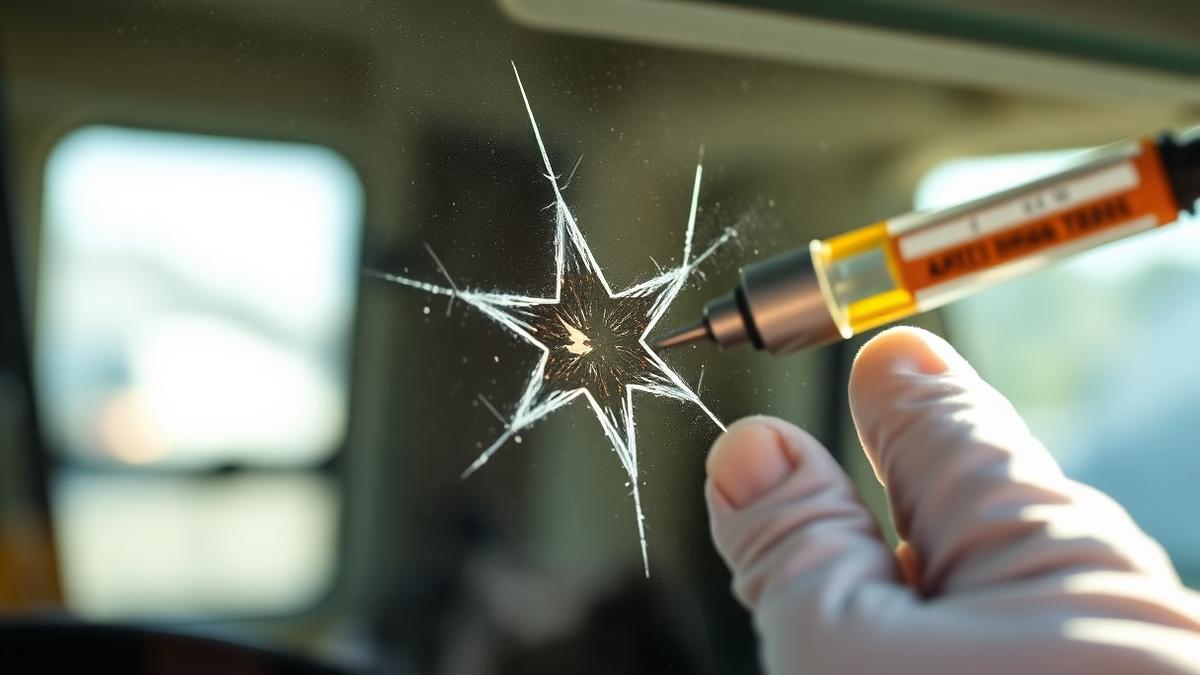
Step by step
- 1
Slow down and exit
Ease off the throttle, avoid hard braking, and take the next safe exit or pull-out. Speed and pavement joints flex the cap and drive the crack.
- 2
Kill the temperature swing
Turn off defrost, dash A/C and heat aimed at the windshield. A 30-degree gradient across a 6-foot panel is the single biggest reason a crack runs overnight.
- 3
Stabilize the crack
Wipe dry and lay clear packing tape over the crack on the outside only. It keeps dirt and moisture out of the break so a resin repair stays possible.
- 4
Photograph everything
Shoot the full windshield, a close-up of the origin point, and your odometer. Insurers ask for the impact point to distinguish a rock chip from stress cracking.
- 5
Judge drivability
Crossing the driver's sightline, reaching an edge or the center divider, or any flex and whistling means stop. Otherwise drive reduced-speed to a serviceable town.
- 6
Book mobile service early
Call an RV glass specialist before you move again. Coach panels are ordered, not stocked — the glass arriving is the long pole, and it can ship to where you'll be.
Do this now
- Drop speed by 10–15 mph and stay off washboard and expansion joints
- Shut off defrost and any vent blowing directly on the glass
- Tape the crack on the outside with clear tape
- Photograph the impact origin, the full panel and the odometer
- Call a mobile RV glass crew and give them your coach year, make, model and chassis
- Check whether your policy has full glass coverage before you pay out of pocket
Do not do this
- Blasting defrost or A/C at the windshield to "see better"
- Pouring water on a hot cracked panel
- Slamming the door or the cargo bays — pressure spikes run cracks
- Driving a two-piece Class A set with a crack reaching the center divider
- DIY resin kits on a crack longer than 6 inches
- Booking the first auto glass chain that answers — most decline Class A on arrival
Fast facts
| Drivable? | Usually yes at reduced speed, unless the crack crosses your sightline |
| Typical crack growth | 1–4 inches per day of driving once it starts running |
| Repairable limit | Chips under a quarter; cracks generally under 6 inches |
| Mobile road service | Available in most metros; 24–72 hours once glass is in hand |
| Class A replacement cost | $1,200 – $4,500 installed |
| Van-chassis cab glass cost | $400 – $900 installed |
Why RV windshields run cracks faster than car windshields
A motorhome windshield sits in a fiberglass cap that twists with the frame. Every expansion joint, every driveway apron and every crosswind puts load into the glass edge that a unibody car never sees. Add a panel that is three to five times the area of an automotive windshield and the same chip behaves very differently.
That is why the advice that works for a car — "it will be fine until you get home" — strands RV owners. A 4-inch crack on a Friday is frequently a full-panel crack by Monday, and once it reaches an edge the repair option is gone.
- Chassis flex loads the glass edge on every uneven surface
- Large panels mean bigger thermal gradients across a single sheet
- Two-piece Class A sets fail toward the center divider first
- Roof A/C and slide operation twist the cap while parked
The lead-time trap nobody warns you about
The repair is a day. Getting the panel is the wait. Coach glass is distributed through RV glass suppliers, not automotive warehouses, and a given Class A panel may exist in two or three regional locations nationally. Ordering it while you are still 400 miles out is the difference between a two-day delay and a two-week one.
Good mobile crews will ship glass ahead to a campground, a storage yard, or a dealer lot and meet you there. Give them your coach year, make, model and the chassis under it on the first call so the part search starts immediately.
What insurance actually covers on the road
Comprehensive coverage on a motorhome policy covers glass, and several states require a zero-deductible glass option. On a travel trailer or fifth wheel, window glass usually falls under comprehensive on the trailer policy rather than your tow vehicle policy — a distinction that costs people a claim every day.
File before the work, not after. An insurer that never saw the damaged panel will contest a rebuilt-from-receipts claim, and photos taken at the roadside carry more weight than photos taken in a shop bay.
Frequently Asked Questions
Can I keep driving my RV with a cracked windshield?
Usually yes at reduced speed if the crack sits outside the driver's line of sight, has not reached an edge, and the glass is not flexing or whistling. Stop and get mobile service if the crack crosses your sightline, reaches the center divider on a two-piece set, or the panel moves in its gasket.
How fast does an RV windshield crack spread?
Once a crack starts running, expect one to four inches per driving day. Temperature swings and rough pavement accelerate it, which is why shutting off defrost and slowing down materially changes your outcome.
Will tape stop the crack from spreading?
No. Tape keeps dirt and water out of the break so a resin repair remains viable and stops loose glass from lifting. It does not carry load. Apply it to the outside only.
Can a mobile crew replace an RV windshield at a campground?
Yes, and it is the norm for coach glass. They need level ground, roughly 12 feet of clearance around the front cap, and dry weather within the urethane's safe drive-away window.
Does my insurance cover a windshield crack that happened while driving?
Comprehensive coverage handles road-debris glass damage on a motorhome. Photograph the impact origin — insurers use it to separate covered debris damage from non-covered stress cracking.
Get RV Glass Quotes Near You
Tell us about your RV and we'll match you with a verified mobile or in-shop RV glass specialist in your area.
Prefer to browse first? Search RV glass shops by zip code.
Mobile RV Glass Specialists We've Vetted
More RV Glass Emergencies
- RV Window Broken On The Road — Emergency Steps & Temporary Fix
- RV Windshield Leaking Water — Find The Source & Fix It Properly
- RV Windshield Replacement At A Campground — How Mobile Service Works
- RV Windshield Chip Repair — When DIY Works And When It Ruins The Glass
- Need RV Glass Fixed Before A Trip — Realistic Timelines & Rush Options